General play tips, not veterinary advice. Every pet is different, so check with your vet if you have concerns.
To introduce a slow feeder to your dog, begin with a small part of a familiar meal in the easiest accessible area. Stay nearby, watch whether your dog can reach the food comfortably, and keep the rest of the meal available through their usual feeding routine. The first useful result is a dog who understands how to get a bite without fighting the feeder.
This plan is for a dog who normally eats willingly but rushes through food or finds a new feeding setup confusing. It covers the change from a familiar bowl to a different food-access task. Our licking and slow-feeding guide introduces feeding formats; here, the focus is fitting the task to your dog and deciding when to simplify or stop.
Check the eating problem before changing the bowl
Notice what actually happens at an ordinary meal. Does your dog gulp food, push the bowl across the floor, look toward another pet, or leave food behind? Make a short note without interrupting them. A description such as “takes large mouthfuls, then checks the doorway” gives you two things to address: food access and the room.
The American Kennel Club describes slow feeders and food puzzles as options for dogs who eat quickly. That does not make a new feeder a treatment for every eating problem. If rushing is a sudden change, or eating brings repeated vomiting, discomfort, or reduced appetite, contact your veterinarian. Preventive Vet explains that medical and behavioral factors can contribute to fast eating.
Repeated attempts to vomit with little or nothing coming up, a swollen abdomen, marked distress, or collapse need emergency veterinary attention. The University of Florida’s veterinary hospital identifies these as possible bloat signs. Do not wait to see whether another feeding method helps.
Choose for comfortable access, not maximum difficulty
A slow-feeding bowl puts obstacles between mouthfuls. A slider puzzle adds a movement your dog must learn. A textured mat asks for licking. Those are different tasks, even when all involve food. Choose the action your dog can manage with food they already eat, rather than choosing the most complicated surface.
For a supervised slider activity, Slide & Solve Puzzle Feeder has attached sliders over shallow food pockets and a removable base. The live product guidance says cat and dog editions have different slider resistance. Choose the dog edition; do not assume the cat edition offers an appropriate shortcut. This is a food-search activity to consider for part of a meal, with no promise about how many minutes it will add.
Check the edition’s dimensions and food compatibility before ordering. If those details are missing, ask us for them, including pocket access and the cleaning method. There is no verified measurement here from which to prescribe a breed or weight range. At introduction, your dog should be able to reach the exposed food without wedging their muzzle, scraping their face, or biting the tray. Stop if access looks uncomfortable.
The sniff-and-forage collection shows how the slider format differs from fabric search toys. A different format is an option, but buying several does not solve a fit problem. Start with one suitable item and a clear plan for its first use.
Prepare a quiet meal station
Set the feeder on a stable surface where your dog can stand comfortably. Keep the route to it clear. Move it away from a busy doorway, a child's play area, or a place where another pet waits for leftovers. Preventive Vet recommends separate feeding spaces when competition contributes to rushing.
In a cat-and-dog home, arrange separate rooms before bringing food out. Give each animal their own appropriate meal and keep children out of the feeding area. Our two-pet home guide can help with the wider room arrangement. Do not introduce a new feeder beside a cat’s bowl and expect both animals to ignore each other.
Measure the usual meal first. Set a small amount aside for the introduction and keep the remainder separate. Food used in the feeder comes from that allowance; it is not an extra meal. Keep the usual food and feeding schedule unless your veterinarian has advised a change. A new food, a new room, and a new task together make it harder to identify what your dog finds difficult.
Offer a small, open first serving
- Inspect the clean feeder and its moving parts before adding food. Put damaged items aside.
- Use the easiest arrangement permitted by its instructions. With a slider tray, leave the first food pocket exposed rather than covering every reward.
- Place a small part of the measured meal in that accessible area. Keep food out of joints or spaces it is not meant to enter.
- Put the feeder down and let your dog approach. Watch from a comfortable distance without reaching over their mouth.
- Finish the introduction after an easy discovery. Offer the remaining meal through the familiar routine.
There is no need to fill every pocket. You are checking that your dog can take food from this surface, not asking them to solve the whole tray. If they eat the exposed portion and look for more, you can repeat that same easy serving while staying within the measured meal. Keep your hands clear while they eat.
If your dog ignores the feeder, let the attempt end. A brief look or sniff gives you information, but it is not a reason to withhold the remaining food. If they also decline their usual meal, contact your veterinarian rather than treating the refusal as a puzzle lesson.
Add one change after the easy version works
Repeat a comfortable starting setup before adding difficulty. For a slider tray, a later step might be a partly covered pocket alongside an open one, if the product instructions permit it. Keep the food, room, and feeder position familiar. Change the food access alone so you can see the effect.
Watch the whole interaction. Can your dog get a bite, pause, and continue without chewing the tray or repeatedly throwing it around? A longer meal is not automatically a better meal. There is no universal target time or deadline for graduating from the easy setup. You can keep using an accessible arrangement if it suits your dog.
Do not add loose rocks, small balls, or improvised blockers to make food harder to reach. Preventive Vet specifically warns against rocks and sticks as bowl obstacles. Choose an appropriate feeding format instead of turning an existing dish into an unpredictable object pile.
Troubleshoot the action you can see
- The feeder slides away. Stop and correct the station’s stability before offering another portion. Do not hold it beneath your dog’s mouth while they eat.
- Food remains in one pocket. Check access after your dog has moved away. Use an exposed pocket next time; do not push food into deeper areas to prolong the meal.
- Your dog bites or lifts the tray. End the activity. Slide & Solve is not a chew toy, and a loose slider is a reason to stop using it.
- Your dog eats the easy portion but leaves the covered one. Return to the open setup. More coverage can wait.
- Your dog stiffens, growls, or snaps as someone approaches. Give space, keep people and other pets away, and seek veterinary or qualified behavior support. Do not practice taking the feeder away.
Clean, inspect, and make the next meal predictable
Once your dog has finished and moved away, remove leftovers and clean the equipment according to its instructions. The FDA’s pet-food handling guidance recommends washing hands before and after handling pet food and washing feeding bowls and utensils after use. Promptly refrigerate or discard unused canned or pouched food.
For Slide & Solve, follow the tray and removable base’s care directions, dry them fully, and inspect the attached sliders before the next session. The product page does not establish dishwasher safety or a permitted water temperature. Get missing care details before choosing a cleaning method; a removable base alone does not answer those questions.
Write down the portion offered, the accessible area used, any food left, and what prompted a stop. Use that note to repeat or simplify the next introduction. Comfortable access and a meal your dog can finish matter more than increasing the challenge.
These are general feeding and play tips, not a substitute for veterinary advice. Ask your veterinarian about your dog’s individual diet, health, behavior changes, or exercise restrictions.
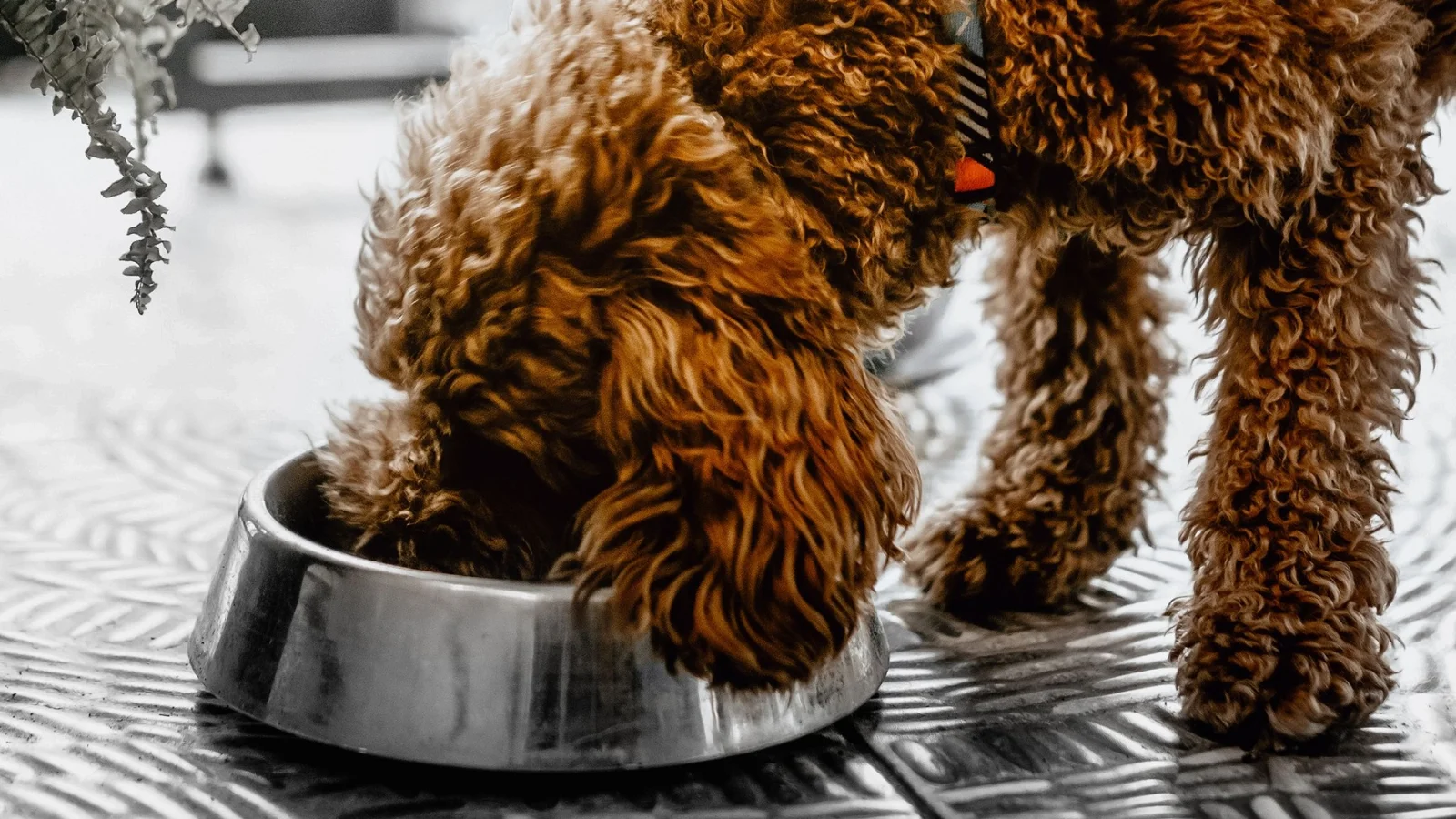
Editorial photograph: Burak Evlivan / Pexels, used under the Pexels License. The photo shows an ordinary feeding bowl; it does not show a wagglytoys product or a puzzle setup.
Questions and answers
Should I put the whole meal in the slow feeder on day one?
Begin with a small part of the measured usual meal in an accessible area. Offer the remainder through the familiar feeding routine while your dog learns. Do not add extra food or withhold the rest of the meal to encourage solving.
Does a longer meal mean the feeder is working well?
Time alone does not show that the setup suits your dog. Check comfortable food access, willing eating, and the absence of biting or throwing the feeder. Simplify or stop when the task creates a struggle.